

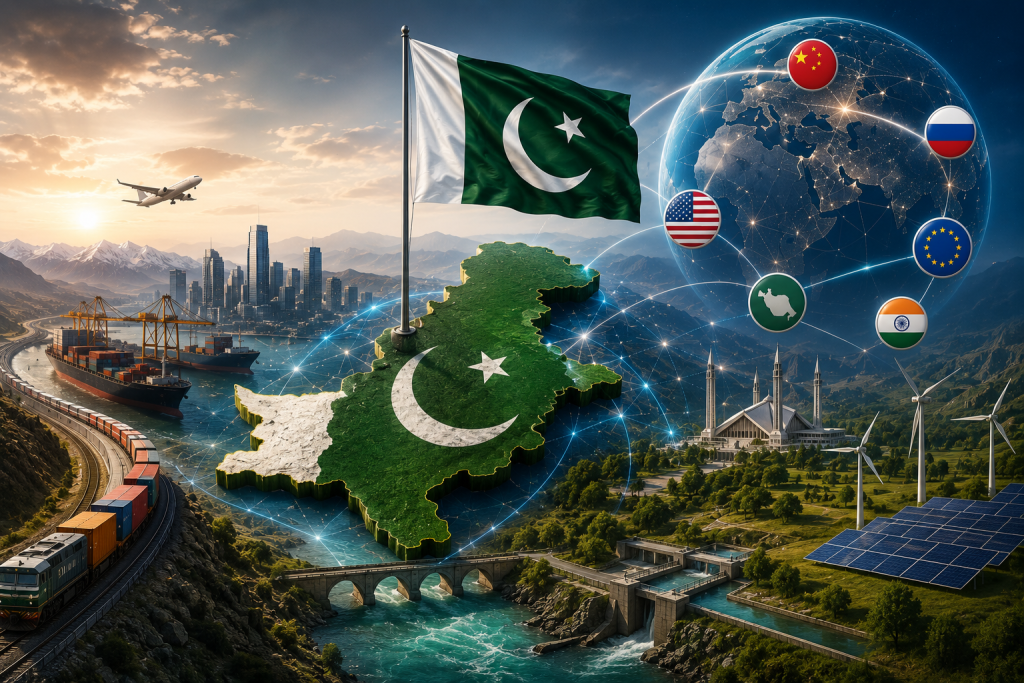
The growing geopolitical uncertainty is reshaping how environmental science is perceived and practiced worldwide. There is a possibility that we will see a multipolar world in the coming decades where there will be a geopolitical power shift, and new alliances will be formed. Environmental science will become region specific and less centralized. New environmental policies may be formed, and priorities may vary across regions depending upon the local economic goals, resource availability and political systems.
Pakistan is a developing country, and its environmental approach has always been based on necessity instead of leadership in global climate agendas. Pakistan’s focus remains on flood management, addressing water scarcity issues, supporting agriculture sector, and coping with rapid urbanization. In future, Pakistan may align its environmental strategies with regional partners. A decentralized system will allow better implementation of environmental laws. This will help in finding more practical and context specific solutions rather than adopting externally directed models and frameworks.
Right now, it’s too early to be sure about the long-term geopolitical future but if global influence shifts towards Asian powers, Pakistan’s role could become more significant. The country could become an active regional participant rather than a passive recipient of environmental funding. Pakistan’s has a very important and strategic geographic position. It has a great experience in disaster management. This could make Pakistan an important contributor to regional environmental cooperation. Environmental projects may increasingly focus on shared regional challenges such as water systems, cross-border ecosystems, and climate resilience, rather than
wider global targets.
This transition to a peaceful sustainability conscious multipolar world will only take place if Pakistan’s hostile neighbors also realize the importance of these issues. Friendly neighbors are a blessing but the hostility with its enemies remains a hurdle to resolve the environmental problems. In case, things go towards a full scale war, Pakistan’s environmental future is dark because the focus will shift toward defense, economy and politics rather than the environment.
Pakistan has come a long way; the country’s environmental researchers have worked really hard to raise consciousness about the environmental issues and find solutions to preserve the contaminated and depleting resources. Despite the unpredictable circumstances, Pakistan must continue to strengthen its own institutional capacity, research base, and policy consistency to adapt to the challenging situation.
If things go in the right direction, there is a lot of hope for Pakistan’s environmental future. The country must address the urgent domestic challenges first and be prepared to adapt to changing power structures at the same time in order to ensure that the environmental management remains a key pillar of stability and development in an increasingly uncertain global political scenario.
Note: A condensed version of this article was previously published in DAWN’s Editorial section. This is the author’s original, complete version with additional discussion and analysis.
Reference: https://www.dawn.com/news/201433